


ABOUT
(1).png)
The Institute of Film and Media Studies
Boğaziçi University’s Institute of Film and Media Studies was established in 2024 with the goal of launching Türkiye’s first English-language graduate programs in the fields of film and moving image studies, global screen cultures, media studies, digital cultures, contemporary media arts, and sound studies within a public university. The Institute will initially offer a master’s program, with plans to expand into doctoral studies in the coming years. It also hosts an undergraduate-level Certificate Program in Film Studies, offering historical, theoretical, and practical courses.
Both the certificate and graduate programs are designed to equip students with the analytical and methodological tools necessary for conducting rigorous historical, theoretical, and critical inquiries into film texts, moving image aesthetics, screen cultures, new media art practices, creative industries, digital cultures, auditory cultures, and audience studies. Through comprehensive and interdisciplinary coursework, students are encouraged to explore their intellectual potential, engage in research on specialized topics, and develop strong analytical thinking skills. These programs provide a robust foundation in theoretical frameworks and research methodologies, preparing students to critically engage with the complexities of contemporary global audiovisual culture.
The Institute is committed to the highest standards in research and teaching, with a mission to cultivate a new generation of academic researchers in film and media studies and to contribute to the production of academic knowledge at an international level. Its faculty members hold doctoral degrees from leading institutions across the globe. The Institute’s foundation marks an important step toward strengthening Türkiye’s ties with globally recognized schools of film and media arts, the international film community, and the creative industries.
Our Mission
• To educate and mentor a new generation of academic researchers in the fields of film and moving image studies, global screen cultures, media and digital culture studies, contemporary media arts, and auditory culture studies.
• To foster a diverse, inclusive, and collaborative community of scholars, artists, practitioners, and students committed to advancing knowledge and creative inquiry in these fields.
• To commit to a culture of academic excellence and continuous improvement.
Our Vision
• To become a globally recognized institute through the excellence of its academic programs.
• To offer graduate programs that embrace interdisciplinary and comparative perspectives, promote theoretical and methodological diversity, and encourage collaboration across research areas.
• To facilitate academic exchange and collaboration among national and international researchers in film and moving image studies, global screen cultures, media and digital culture studies, contemporary media arts, and auditory culture studies.
History of the Establishment of Our Institute
The idea of founding the Institute of Film and Media Studies dates back to September 2022. Preparations for its establishment were launched on February 1, 2023, under the leadership of the founding director, Assistant Professor Cihat Arınç. After a six-month preparatory period, the proposal to establish the institute was reviewed and approved at the Boğaziçi University Senate meeting held on August 2, 2023 (Decision No. 2023/7). At the same meeting, it was resolved that the institute would include two divisions: “Film Studies” and “Media Studies.” The Senate decision was forwarded to the Council of Higher Education (YÖK) by the Rectorate of Boğaziçi University on September 3, 2023, thereby officially initiating the establishment process.
Following nearly a year of bureaucratic evaluation, the proposal was deliberated at the YÖK General Assembly meeting on August 22, 2024. Having been approved, it was submitted to the Presidency. The institute was formally established by Presidential Decree No. 8991, dated September 19, 2024. The decree was published in Resmî Gazete (The Official Gazette) on September 20, 2024 (Issue No. 32668), thereby entering into force. After the institute’s official foundation, Assistant Professor Cihat Arınç was appointed by the Rectorate of Boğaziçi University as its first director on November 19, 2024, and assumed office on the same date.
The Presidential Decree that established the Institute of Film and Media Studies also dissolved the Aydın Doğan Communication Institute, which had been founded under the umbrella of Boğaziçi University by Cabinet Decree No. 99/13406 dated September 23, 1999, and announced in Resmî Gazete (The Official Gazette) on October 26, 1999 (Issue No. 23858). The Aydın Doğan Communication Institute had remained inactive for 25 years, never having been structured after its foundation. In a press statement regarding the closure, the management of the Aydın Doğan Foundation remarked: “It is only natural that this institute, which had remained on paper and was never able to become operational, has now been closed.”
Academic Activities of Our Institute
The Institute of Film and Media Studies began its academic teaching activities with the undergraduate-level Certificate Program in Film Studies. Originally established in 1998 and conducted for twenty-seven years under the Department of Western Languages and Literatures, the program was transferred to the Institute in recognition of its direct relevance to the field. Preparations for this transfer began on September 23, 2024. While preserving the basic course structure, the curriculum was fully redesigned by the founding director, Assistant Professor Cihat Arınç. In revising the program, undergraduate curricula from leading universities in the United States, Canada, the United Kingdom, and Europe were carefully studied, alongside the specific academic needs and cultural dynamics of Türkiye. After nearly five months of intensive work, the result was a more comprehensive, integrated, and advanced curriculum.
The proposal for the new certificate program was unanimously approved at the Boğaziçi University Senate meeting on February 28, 2025 (Decision No. 2025/1). Following further revisions, the updated version was once again unanimously approved on July 24, 2025 (Decision No. 2025/2), thereby officially coming into effect. The renewed program is designed to introduce students to film history, film theory, and global screen cultures within a multidimensional framework, and to provide them with the ability to critically analyze and discuss the visual, auditory, and semantic layers of film texts through theoretical questions. On a practical level, the program also aims to develop students’ analytical and literary skills in idea generation and screenwriting, and to equip them with the tools needed to produce film and moving-image projects using contemporary technologies.
To earn the Certificate in Film Studies, students must successfully complete eight film courses, each worth three credits. Combining historical, theoretical, and practical components, the program offers students interested in cinema a broad and solid foundation in the discipline. Courses are grouped into five categories:
• Group 1: Film Grammar, Theory, and Analysis
• Group 2: Film Aesthetics and Production
• Group 3: Genre, Adaptation, and Intermediality
• Group 4: Film History and Global Screen Cultures
• Group 5: Special Topics in Film Studies
Historically oriented courses help students understand how narrative, documentary, experimental, and animated forms have developed globally since the early 20th century. These courses examine not only formal transformations but also the social, political, and economic forces that have shaped film industries and screen cultures. By addressing regional and national cinemas alongside transnational, diasporic, and postcolonial productions, they reveal the multilayered structure of world cinema.
Theoretical courses encourage students to situate past and contemporary cinematic practices within cultural and aesthetic contexts. Topics include classical and contemporary film theory, methods of film analysis and criticism, genre theory, adaptation studies, and intermediality. In this way, students are trained to sharpen their critical thinking skills and generate creative analyses.
Practical courses focus on the aesthetic and technical dimensions of filmmaking, providing students with essential competencies in screenwriting, visual design, sound and music, editing, and post-production. Oriented toward the creation of original works—narrative, documentary, experimental, or hybrid—these courses cover the entire production process, from idea development to audience presentation. Students are thus encouraged to explore audiovisual expression and cultivate their own creative voices.
In the first semester of the 2025–2026 academic year, the renewed certificate program launched its first FILM-coded courses, taught entirely in English. The inaugural offerings were:
FILM 302: Film History I: Beginning to 1960
FILM 325: Screenwriting V: Script Analysis
FILM 326: Making of a Film
FILM 416: The Historical Film
FILM 429: Animation I
FILM 431: Japanese Animation
FILM 436: Cinema and the Graphic Novel
FILM 437: Cinema and Video Games
FILM 48A: Special Topics: Screenwriting Everywhere All at Once
FILM 48C: Special Topics: Motion Graphics and Design
With the expansion of its faculty, the Institute has already begun preparations to launch its first graduate program at the master’s level, and in the medium term aims to further strengthen its educational and research capacity through a doctoral program.
Monthly Film Screening Programs of Our Institute
Since December 2023, the Institute of Film and Media Studies has organized monthly thematic film screening programs throughout the academic year, excluding August and September. Held in the cinema hall of Mithat Alam Hall on the South Campus, these programs present carefully curated selections built around a different theme each month. The films include both classics that have shaped the history of cinema and distinguished works of contemporary filmmaking. With an average of twelve films screened per month, the program offers students a rich platform to engage with cinema as a cultural, aesthetic, and intellectual practice.
The screenings are conducted solely for educational purposes and without any commercial intent. All activities are carried out in strict compliance with national and international copyright regulations and the principles of “fair use.” Article 33 of the Law on Intellectual and Artistic Works of the Republic of Türkiye (Law No. 5846), Article 10/2 of the Berne Convention, Article 13 of the TRIPS Agreement, Article 10 of the WIPO Copyright Treaty (WCT), and Article 16 of the WIPO Performances and Phonograms Treaty (WPPT) explicitly permit non-commercial film screenings in educational and research institutions. The Institute fully adheres to this legal framework, ensuring that all screenings serve exclusively pedagogical purposes.
The program is free of charge and open to all university students, with priority given to Boğaziçi University students. Students from other institutions may also attend by presenting a valid student ID at the South Campus entrance. This policy not only facilitates access but also fosters inter-university exchange, helping to build a broad and inclusive film community that brings together students from across Istanbul.
Over time, these programs have grown to become far more than simple viewing events. Each screening creates a space for reflection and dialogue, opening cinema to discussion in its historical, cultural, aesthetic, and intellectual dimensions. By encouraging students to engage both as viewers and as interpreters, the screenings provide a dynamic learning environment. The strong interest shown by our students underscores their significance as a central part of the Institute’s mission to contribute to the enrichment of film culture in Türkiye.
Our Institute Building: Mithat Alam Hall
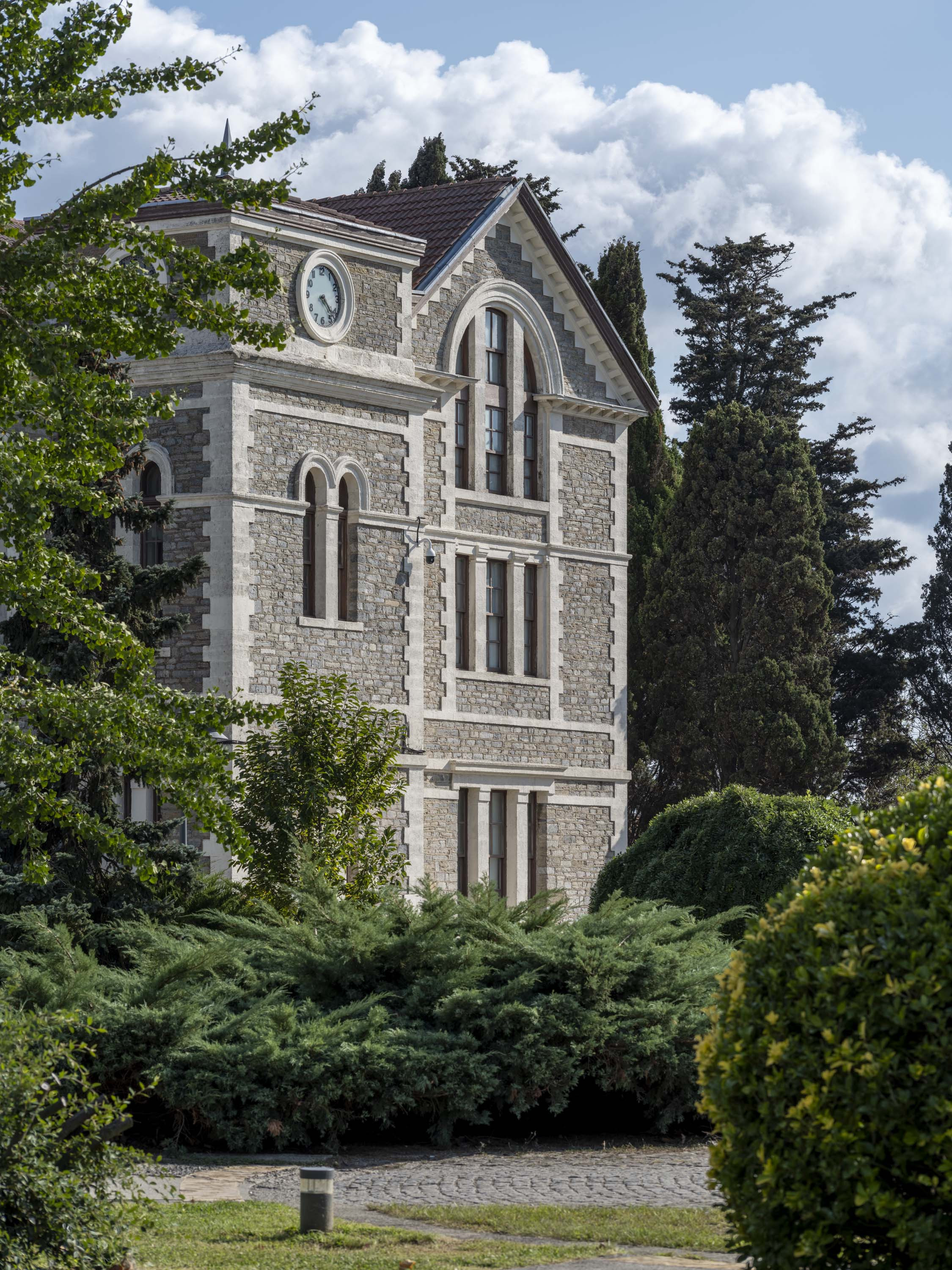
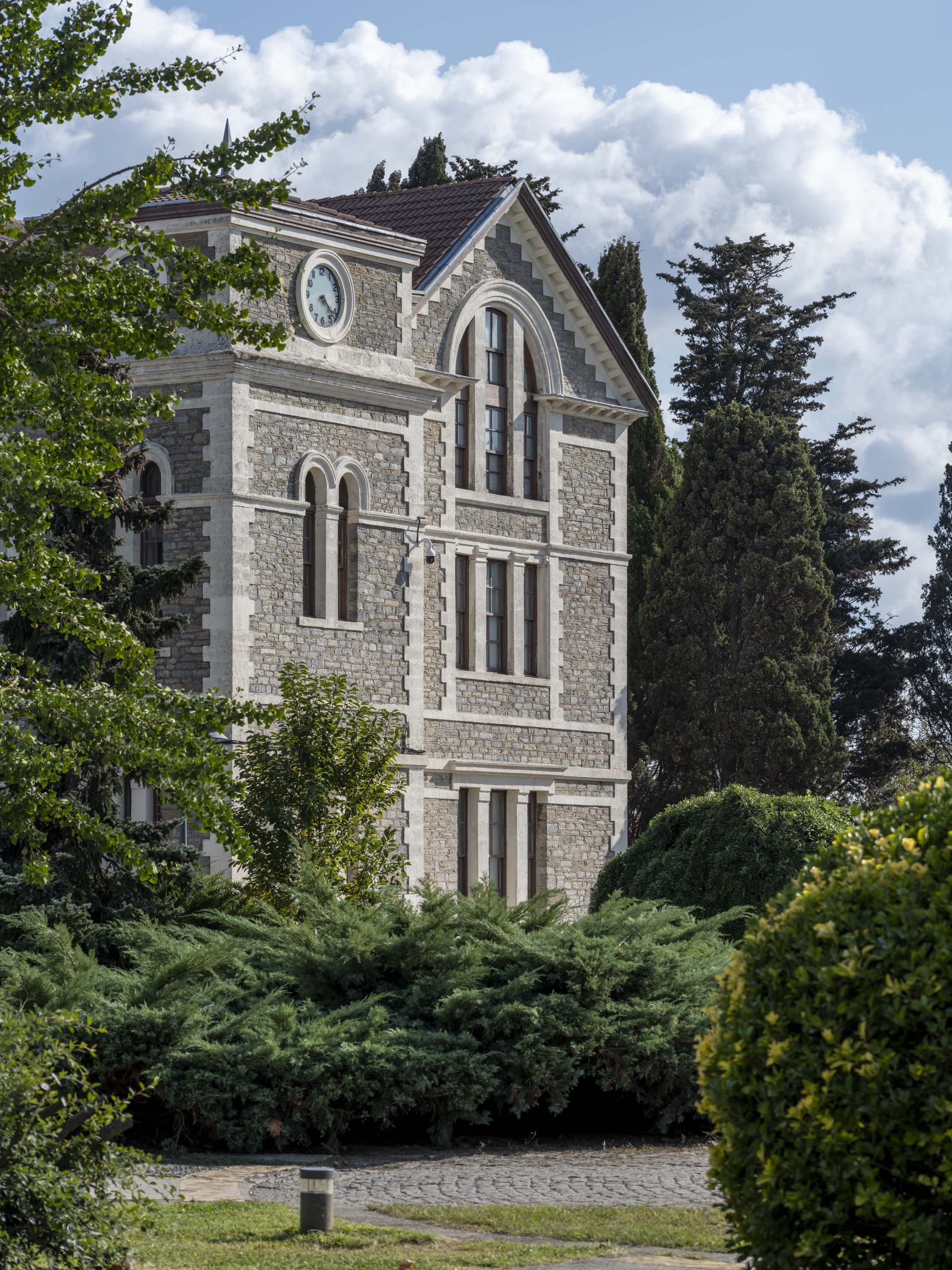
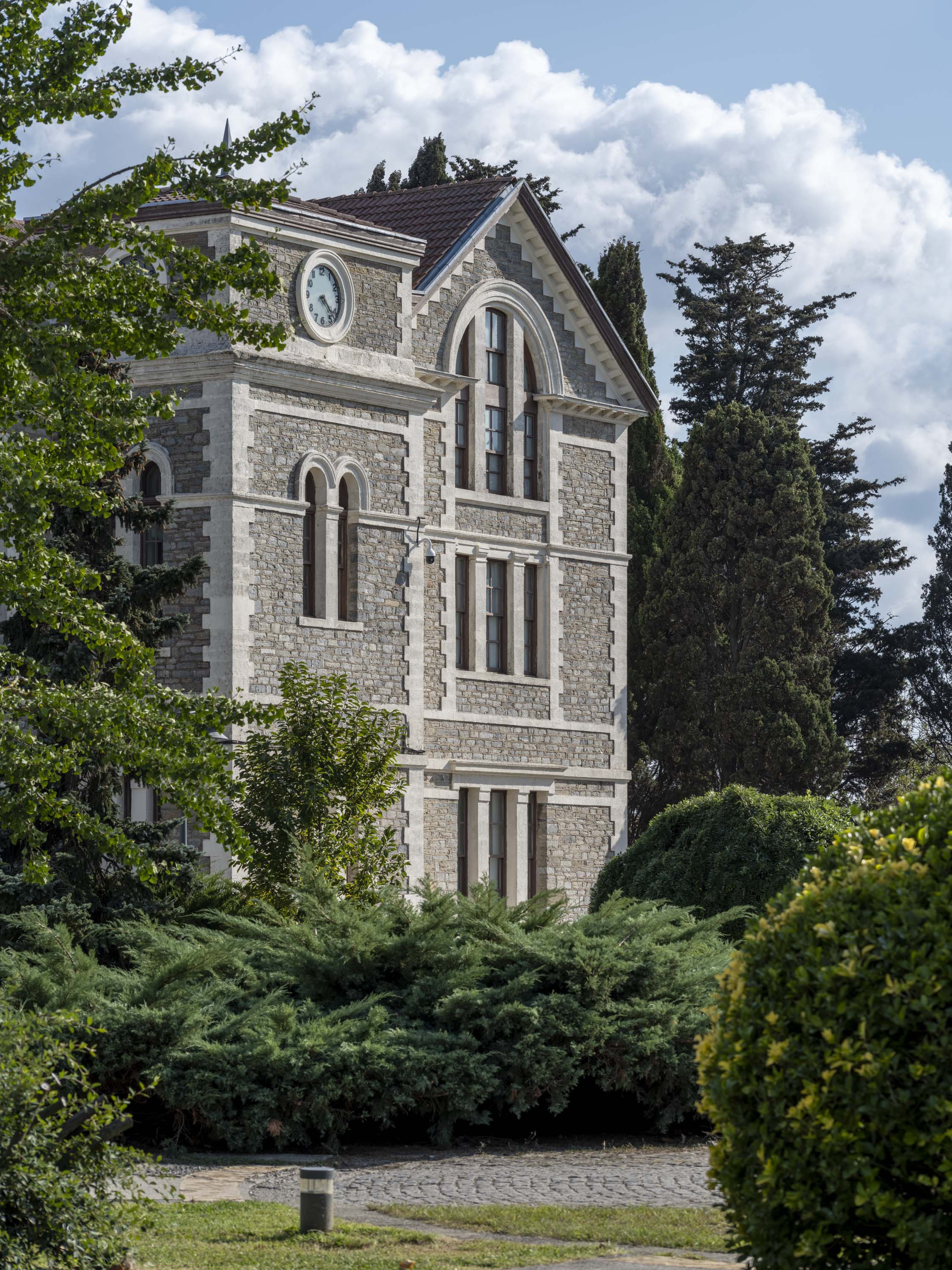
The building that now houses the Institute of Film and Media Studies, Mithat Alam Hall, was first constructed in 1931 as a site office for the construction of the building that today serves as the Rectorate. From the 1930s to the 1950s, it functioned as a music classroom for Robert College middle school students, and from the 1950s until the late 1990s it served as faculty housing.
In 2000, thanks to a generous donation by the late Ahmet Mithat Alam (1945–2016), a 1968 graduate of Robert College, the building was demolished and completely rebuilt, reopening as the Boğaziçi University Mithat Alam Film Center. For many years it served under this identity. With the expiration in 2023 of the agreement signed on December 15, 1999, between the Boğaziçi University Rectorate and the Mithat Alam Education Foundation (MAEV), the building entered a new chapter. At its meeting on November 29, 2023 (Decision No. 2023/30), the University Executive Board unanimously resolved to rename the building “Mithat Alam Hall”, a decision formally communicated to all university units by the Rectorate on December 8, 2023.
Today, Mithat Alam Hall is distinguished not only by its long and layered history but also as a contemporary space of learning at the heart of the Institute’s academic, intellectual, and cultural life. It stands as both a tangible symbol of the university’s longstanding contributions to film culture in Türkiye and a dynamic environment where students, faculty, and researchers exchange ideas, engage in creative production, and cultivate critical thought.
The building’s facilities serve this mission. The 61-seat cinema hall hosts thematic screenings of significant films on weekday evenings, and during the day it serves as a classroom for courses offered as part of the Certificate Program in Film Studies. The Film Viewing Room provides students with a dedicated space to watch films individually or in small groups, drawing on the Institute’s extensive film archive, and offers them the opportunity to explore film culture beyond the classroom.
The Cinephile Room offers a warm and convivial meeting space where students can relax, converse, share their reflections on films, and study together. Meanwhile, the Film Archive Room houses one of Türkiye’s most distinctive audiovisual collections, comprising over 7,500 films and some 15,000 moving image recordings, continually enriched through new acquisitions and donations. Offices and workspaces are also provided for the Institute Director, the Institute Secretary, faculty members, and administrative staff.
All preparatory efforts for the establishment of our Institute were carried out throughout 2023 and 2024 at Mithat Alam Hall. Officially inaugurated in September 2024, the Institute of Film and Media Studies now conducts its academic research and educational activities within this distinguished venue — long recognized for its enduring contributions to Türkiye’s film culture. With great honor and pride, the Institute is committed to preserving and sustaining the cinematic legacy of the late Mithat Alam, whose vision and generosity continue to inspire generations of students and scholars at Boğaziçi University.
(1).png)
Directorate of the Institute of Film and Media Studies
First Published: Tuesday, October 1, 2024 – Last Updated: Monday, September 1, 2025
